Compact Robot
Automate manual processes with the Alsys Compact Robot.

Automate manual processes with the Alsys Compact Robot.

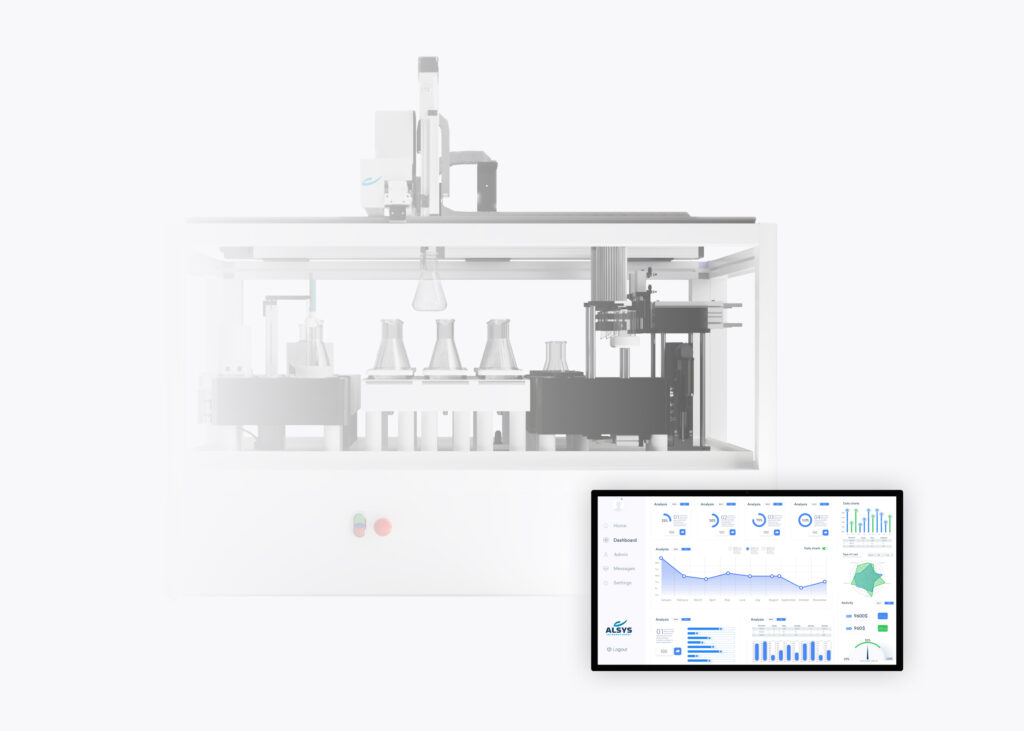
 Modules
Years of innovation and hands-on experience with our High-Performance systems have laid the groundwork for the Compact Robot. The same robust modules used in large-scale platforms are now available in a smaller footprint—giving you access to a wide range of automatic sample preparation modules and ready-to-deploy applications. This ensures both reliability and flexibility, even in the most compact lab setups.
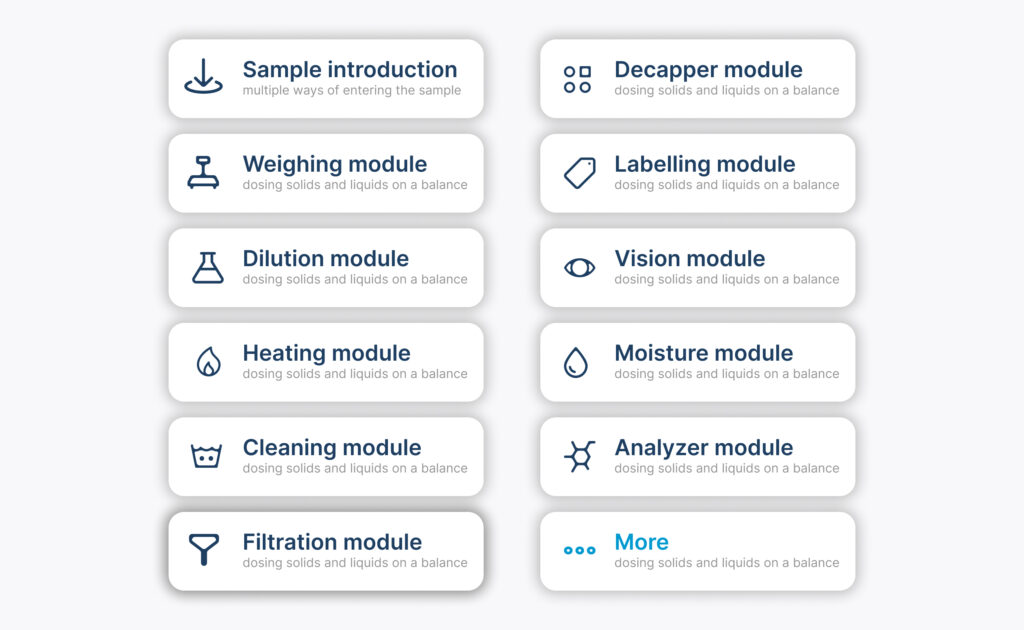
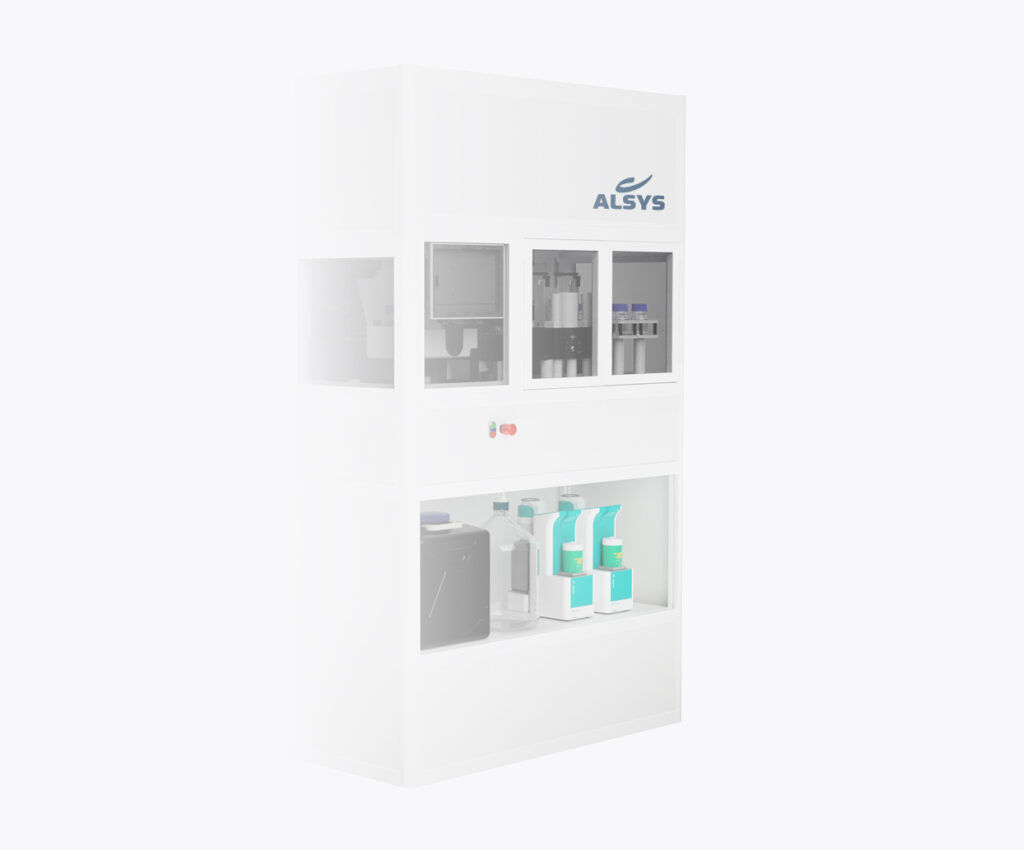
 Platform
The Alsys Compact lab robot is the newest line of lab automation solutions. Built on continuous innovation and expanded production capabilities, these systems offer the same core benefits as our High-Performance version—tailored for a single process or analysis. Ideal for labs seeking targeted automation, the Compact Robot delivers accuracy, speed, and reliability in a cost-effective, space-saving solution.
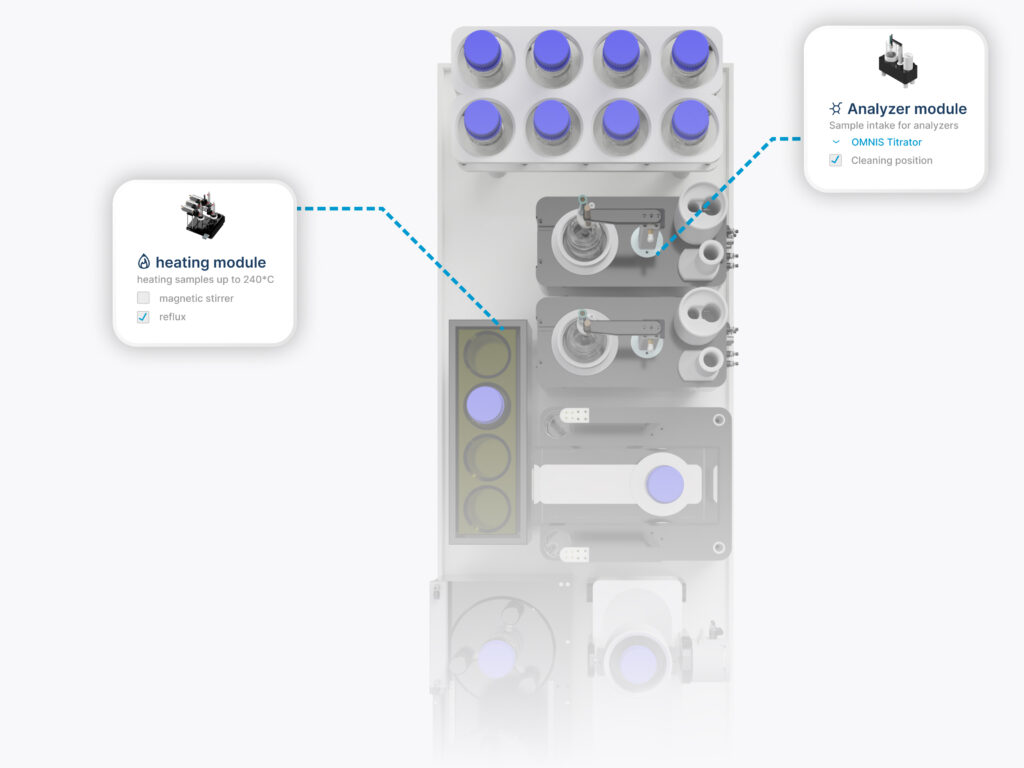
 Analyzers
The Compact lab robot can be configured to work with a wide range of analytical instrument—new or existing—provided it meets the technical requirements for long-term use. This allows us to deliver a fully integrated solution: from sample input to online results, all within a single automated workflow.


The Alsys Compact Robot is a footprint-optimised lab robot, under 1.2 m², built to automate a single analytical method to the same standard as the larger High-Performance system. It handles the full sequence from sample intake through preparation to analysis, using the same core module technology as the High-Performance Robot in a smaller, more affordable package.
It was developed specifically for laboratories that need to automate one frequently run method rather than a whole multi-method workflow, making targeted lab automation accessible without the space or investment a full platform requires.
The Compact Robot is a footprint-optimised platform under 1.2 m² built around one to two methods, while the High-Performance Lab Robot is a large 3–5 m gantry system that runs up to five parallel methods and multiple integrated analyzers at once. Both share the same control software and the same underlying module technology.
The choice comes down to scope and space: the Compact Robot fits inside a standard fume hood or on a bench with no civil works or HVAC upgrades, while the High-Performance Robot suits laboratories that need to automate several methods and higher volumes within one enclosed system.
The Compact Robot automates titration, spectroscopy and chromatography, including ion chromatography, gas chromatography and liquid chromatography, as well as mass spectrometry, integrating the connected analyzer directly into the same automated workflow as the sample preparation.
Which technique a given system runs depends on the method and the customer’s requirements. The robot is built around one method at a time, so it is configured to the specific instrument and analysis a laboratory wants to automate rather than shipped with a fixed technique set.
Yes, the Compact Robot was developed specifically to make lab automation accessible to laboratories that want to automate a single method without the space, complexity or investment of a full platform. It delivers the same accuracy, speed and reliability as the High-Performance system in a smaller, more cost-effective footprint.
It suits laboratories where one method dominates the workload — a frequently repeated, time-consuming or hazardous analysis — and where a full multi-method system would be more capability than the lab currently needs.
The Compact Robot has a footprint under 1.2 m², small enough to fit inside a standard fume hood or on a laboratory bench. It requires no civil works or HVAC upgrades to install, unlike larger automation platforms that may need dedicated space or ventilation changes.
This compact footprint is a deliberate design choice: it is what allows a laboratory to add automation for one method without reorganising the lab or committing floor space that would otherwise go to other work.
Yes, the Compact Robot can be configured to work with a wide range of analytical instruments, new or existing, provided the instrument meets the technical requirements for long-term automated use. Alsys works closely with established analytical instrument companies including Metrohm, Mettler Toledo and Avantes.
Where an existing instrument is suitable, it can generally be integrated rather than replaced, so a laboratory does not need to purchase a new analyzer solely to automate the method it already runs.
The Compact Robot automates decapping and capping, heating, stirring, liquid dosing, dilution, titration and measurement, developed and built internally as modules that can be placed into the robot. These steps run as one unattended sequence from sample intake to the analytical result.
Because the modules are developed in-house, they can be configured to the specific sample preparation a method requires, including the dosing of hazardous liquids and other time-consuming or precision-dependent steps that are difficult to standardise by hand.
Yes, the Compact Robot is positioned as a cost-effective, space-saving entry point into lab automation, delivering the accuracy and reliability of the larger High-Performance platform for a single method at a lower investment and smaller footprint. It was built to make automation accessible even to laboratories automating just one process.
Alsys frames the value of automation beyond staff savings alone: consistent, accurate results and a safer working environment for analysts are core benefits alongside cost, particularly for a method that is repetitive, time-consuming or hazardous to run by hand.
Yes, the Compact Robot uses the same robust module technology as the High-Performance system, developed and proven over years on the larger platform and made available in a smaller footprint. It runs on the same control software as the High-Performance Robot, which supports shared parts, training and operating knowledge across both systems.
This shared foundation is what allows the Compact Robot to deliver full-platform reliability for a single method, rather than being a simplified or lower-specification alternative to the larger system.
A typical Compact Robot configuration is built around the specific method being automated: sample intake, the preparation steps that method requires — commonly decapping, dosing, dilution, heating or stirring — and a connected analyzer such as a titrator, spectrometer or chromatography system, all running as one unattended sequence.
Because laboratory personnel can adjust parameters through the Alsys software, the same physical configuration can be tuned to variations of a method rather than requiring a separate build for every small change in procedure.
Lab automation becomes interesting when sample preparation is time-consuming, repetitive, and hazardous for the staff, and when samples need to be analyzed regularly according to specific methods.
With Alsys software, it is possible to add multiple sample preparation methods and adjust parameters. This allows the robot to be used for various analyses.
Tieleman en Drosweg 19
2314 XW Leiden ,NL